Managing purchase requests across multiple departments can be challenging for businesses. From requesting office supplies and IT equipment to purchasing raw materials and professional services, every purchase requires proper authorization, budget verification, and documentation.
Traditional procurement processes often depend on emails, spreadsheets, paper forms, and manual approvals. These methods can lead to delayed approvals, miscommunication, unauthorized purchases, duplicate requests, and limited visibility into organizational spending.
This is where Purchase Requisition Management Software becomes essential.
Purchase requisition management software helps organizations digitize, automate, and manage their internal purchasing requests. It provides a centralized platform where employees can submit purchase requests, managers can review and approve them, and procurement departments can track requests throughout the purchasing lifecycle.
By automating repetitive tasks and establishing structured approval workflows, businesses can improve procurement efficiency, strengthen spending controls, reduce administrative workloads, and make better purchasing decisions.
In this guide, we will explore what purchase requisition software is, how it works, its essential features, business benefits, implementation process, and how to select the right solution for your organization.
What Is Purchase Requisition Management Software?
Purchase Requisition Software is a digital solution that helps businesses create, submit, review, approve, and track purchase requisitions before placing orders with suppliers.
A purchase requisition is an internal document or digital request created by an employee or department to obtain approval for purchasing specific goods or services.
Purchase requisition management software automates this entire process, reducing manual paperwork and providing greater control over purchasing activities.
It acts as a centralized system that connects employees, department heads, finance teams, procurement professionals, and authorized approvers.
How Does Purchase Requisition Management Software Work?
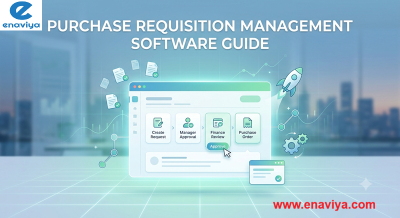
Purchase requisition software follows a structured workflow that ensures every purchase request goes through the appropriate review and approval process.
Although workflows differ between organizations, a typical purchase requisition process includes the following stages.
1. Purchase Request Creation
The process begins when an employee identifies a purchasing requirement.
The employee creates a purchase requisition by entering information such as:
- Product or service description
- Required quantity
- Estimated purchase cost
- Preferred supplier, if applicable
- Delivery requirements
- Department or cost center
- Business justification
- Supporting documents or quotations
The requisition software provides standardized digital forms, helping employees submit complete and accurate requests.
2. Request Submission
After completing the requisition form, the employee submits it through the software.
The system records the request and assigns a unique reference number. The request is then routed to the relevant manager or department head based on predefined approval rules.
3. Budget Verification
Before approving a purchase, organizations need to ensure that sufficient budget is available.
Purchase requisition software can integrate with financial or ERP systems to support budget checks and provide visibility into departmental spending.
This helps finance teams identify requests that exceed allocated budgets and prevent unnecessary expenditure.
4. Approval Workflow
The purchase requisition moves through the required approval hierarchy.
- Department manager reviews the business requirement.
- Finance manager verifies budget availability.
- Procurement manager checks supplier and purchasing requirements.
- Senior management approves high-value purchases when necessary.
Automated approval routing reduces manual follow-ups and ensures requests reach the right decision-makers.
5. Purchase Order Creation
Once the requisition receives all required approvals, the procurement department can convert it into a purchase order.
A purchase order is an official document issued to a supplier confirming the organization's intention to purchase specific goods or services under agreed conditions. The approved requisition provides the necessary information for generating the purchase order, reducing duplicate data entry.
6. Request Tracking and Record Management
The software maintains a centralized record of purchase requisitions, approvals, comments, attachments, and status updates.
Employees can check request progress, while procurement and finance teams can monitor pending approvals, approved purchases, and completed transactions. This creates a transparent and traceable procurement process.
Key Features of Purchase Requisition Management Software
Choosing the right software requires understanding the features that support efficient purchasing operations. Here are the essential features businesses should consider.
1. Digital Purchase Requisition Creation
The software allows employees to create purchase requests through customizable digital forms. Organizations can configure mandatory fields, predefined product categories, cost centers, and supporting document requirements. This standardizes purchasing requests and minimizes incomplete submissions.
2. Automated Approval Workflows
Automated approval workflows are among the most important features of purchase requisition management software. Businesses can establish approval rules based on:
- Purchase amount
- Department
- Cost center
- Purchase category
- Project requirements
- Management hierarchy
3. Multi-Level Approval Management
Some purchasing decisions require authorization from multiple stakeholders. The software supports sequential or parallel approval workflows, ensuring that every purchase receives the required authorization before procurement proceeds.
4. Real-Time Request Tracking
Real-time tracking provides visibility into the current status of every purchase requisition. Employees and managers can identify whether a request is:
- Draft
- Submitted
- Pending approval
- Approved
- Rejected
- Returned for revision
- Converted into a purchase order
5. Budget Control and Monitoring
Budget management capabilities help organizations compare purchase requests against allocated departmental or project budgets. Depending on the software's integration capabilities, the system can flag budget overruns, provide spending visibility, and support better financial planning.
6. Document and Attachment Management
Purchase requisitions often require supporting documents such as supplier quotations, technical specifications, product descriptions, and business justifications. The software allows users to attach and store these documents alongside their requests.
Centralized document management makes information easier to retrieve during audits and procurement reviews.
7. ERP and Accounting System Integration
Integration with ERP, accounting, inventory, and financial management systems helps maintain consistent purchasing information across business operations. It can reduce duplicate data entry and improve coordination between procurement and finance departments.
8. Notifications and Reminders
Automated notifications keep employees and approvers informed about important requisition activities. The system can notify users when:
- A purchase request is submitted.
- An approval is pending.
- A requisition is approved or rejected.
- Additional information is required.
- A request remains pending beyond a defined period.
9. Reporting and Analytics
Reporting tools provide insights into purchasing activities and approval performance. Organizations can analyze:
- Total purchase requisitions submitted
- Pending and approved requests
- Department-wise purchasing activity
- Average approval time
- Budget utilization
- Purchase categories
- Requisition-to-purchase-order conversion
10. Role-Based Access and Audit Trails
Role-based access ensures that employees can only access information and functions permitted by their assigned responsibilities. Audit trails record important actions, including request creation, modifications, approvals, rejections, and timestamps.
This improves accountability, supports internal controls, and helps organizations maintain accurate procurement records.
Benefits of Purchase Requisition Management Software
Implementing purchase requisition software offers several operational and financial advantages.
1. Faster Purchase Approvals
Manual approval processes often involve multiple emails, phone calls, and follow-ups. Automated workflows route requests directly to the appropriate approvers and send reminders when action is required. This reduces administrative delays and helps departments obtain the goods and services they need on time.
2. Better Spending Control
A structured requisition process ensures that purchases are reviewed and authorized before orders are placed. Organizations can establish approval limits, monitor departmental budgets, and identify spending outside approved policies.
3. Improved Procurement Transparency
A centralized platform provides visibility into every stage of the purchasing process. Employees can track their requests, managers can review pending approvals, and procurement teams can monitor purchasing activities.
4. Reduced Manual Workload
Automating requisition creation, approval routing, notifications, and recordkeeping reduces repetitive administrative work. Procurement professionals can spend more time on supplier evaluation, negotiation, strategic sourcing, and cost optimization.
5. Better Accuracy and Data Management
Standardized digital forms reduce missing information, inconsistent data, and manual entry errors. Centralized records also make it easier to retrieve purchase information and maintain accurate procurement documentation.
6. Stronger Compliance and Accountability
Purchase requisition management software helps businesses enforce internal procurement policies. Mandatory fields, approval hierarchies, spending limits, and audit trails create a structured purchasing environment.
7. Increased Employee Productivity
Employees no longer need to navigate complicated paper-based processes or repeatedly contact procurement teams for updates. They can submit requests and monitor their progress through a single platform.
8. Better Management Decisions
Procurement reports provide useful information about spending patterns, approval delays, departmental requirements, and purchasing trends. Management can use these insights to identify cost-saving opportunities and improve resource allocation.
Who Needs Purchase Requisition Management Software?
Purchase requisition management software can benefit organizations of different sizes and industries.
Manufacturing Companies:
Manufacturers regularly purchase raw materials, spare parts, production equipment, and maintenance supplies. The software helps manufacturing organizations coordinate purchasing requirements across production, inventory, maintenance, and finance departments.
Healthcare Organizations:
Hospitals and healthcare facilities purchase medical equipment, pharmaceutical supplies, consumables, and administrative materials. Structured requisition workflows help maintain purchasing controls and ensure that requests follow internal authorization policies.
Educational Institutions:
Schools, colleges, and universities manage purchasing requirements across academic departments, laboratories, administration, and facilities management. The software helps centralize requests and improve visibility into institutional spending.
Retail and E-commerce Businesses:
Retail businesses frequently purchase merchandise, packaging materials, store equipment, and operational supplies. Automated requisition management helps maintain purchasing consistency across multiple locations and departments.
IT and Technology Companies:
IT departments require software licenses, computers, networking equipment, cloud services, and technical resources. Purchase requisition software provides a controlled process for reviewing technical requirements and approving technology-related spending.
Large Enterprises:
Organizations with multiple departments, offices, branches, and approval hierarchies often face complex purchasing processes. A centralized requisition management system helps standardize procurement procedures and improve visibility across business units.
How to Choose the Right Purchase Requisition Management Software?
Selecting suitable software requires evaluating your organization's procurement requirements, approval structure, budget, and existing business systems.
Consider the following factors before making a decision.
1. Understand Your Procurement Requirements
Identify your existing purchasing challenges. Determine how many departments submit requests, how many approval levels are required, what purchasing categories are involved, and where delays commonly occur.
2. Evaluate Workflow Customization
Every organization has different purchasing policies. Choose software that supports configurable approval rules based on purchase value, department, category, cost center, and organizational hierarchy.
3. Check Integration Capabilities
The software should integrate with the ERP, accounting, inventory, and financial systems used by your organization. Integration reduces duplicate work and improves data consistency.
4. Look for a User-Friendly Interface
Employees should be able to create and submit purchase requests without extensive training. A simple interface encourages adoption and reduces errors.
5. Assess Reporting Capabilities
Evaluate whether the software provides useful dashboards and reports for monitoring requisition volumes, approval timelines, departmental spending, and budget utilization.
6. Review Security and Compliance Features
Look for role-based access, approval controls, audit trails, document security, and appropriate data protection measures. These capabilities are particularly important for organizations handling sensitive financial and supplier information.
7. Consider Scalability
Choose a solution that can support additional users, departments, locations, and purchasing volumes as your organization grows.
8. Compare Total Cost of Ownership
Consider more than the initial software subscription. Evaluate implementation costs, customization, integrations, training, maintenance, support, and potential upgrade expenses.
Common Challenges Solved by Purchase Requisition Management Software
Organizations often face recurring procurement problems that affect productivity, spending, and operational performance. Purchase requisition management software addresses many of these challenges.
| Common Challenge | Software-Based Solution |
| Delayed approvals | Automated routing and reminders |
| Unauthorized purchases | Configurable approval hierarchies |
| Missing request information | Standardized digital forms |
| Poor spending visibility | Budget tracking and reporting |
| Lost documentation | Centralized document storage |
| Duplicate data entry | ERP and accounting integrations |
| Limited accountability | Role-based access and audit trails |
| Difficulty tracking requests | Real-time requisition dashboards |
Key Performance Indicators (KPIs) to Measure Requisition Management Efficiency
After implementing purchase requisition management software, organizations should measure its performance using relevant KPIs.
Some important metrics include:
1. Average Requisition Approval Time: Measures the average time required to approve a purchase requisition.
2. Requisition Processing Time: Tracks the time between submission and completion of the requisition process.
3. Approval Rate: Measures the proportion of submitted requisitions that receive approval.
4. Requisition Error Rate: Tracks requests containing missing, incorrect, or incomplete information.
5. Budget Compliance Rate: Measures the percentage of approved purchases that comply with allocated budgets and purchasing policies.
6. Purchase Order Conversion Time: Measures the time taken to convert an approved requisition into a purchase order.
7. Pending Requisition Volume: Tracks the number of requests awaiting review or approval.
8. Policy Compliance Rate: Measures adherence to established procurement procedures and approval requirements.
Monitoring above KPIs helps organizations identify process inefficiencies and evaluate the effectiveness of their procurement software.
Future Trends in Purchase Requisition Management Software
Procurement technology continues to evolve as organizations look for more efficient ways to manage purchasing activities. Several developments are shaping the future of purchase requisition management.
Artificial Intelligence and Automation
AI-powered capabilities can help classify purchase requests, extract information from documents, identify unusual spending patterns, and assist with workflow recommendations.
Predictive Analytics
Advanced analytics can help businesses identify purchasing trends, forecast departmental requirements, and anticipate budget utilization. This supports proactive procurement planning.
Mobile Procurement Management
Mobile-friendly software enables employees and managers to submit requests, review documents, and approve purchases from smartphones and tablets.
Cloud-Based Procurement Solutions
Cloud-based systems provide centralized access to purchasing information and support collaboration across different departments and locations.
Greater Integration Across Business Systems
Modern procurement solutions increasingly connect requisition management with supplier management, inventory, contract management, accounting, and ERP platforms.
Conclusion
Purchase requisition management software is an important tool for organizations that want to improve purchasing efficiency, strengthen financial controls, and simplify internal procurement processes.
By replacing manual requests and disconnected approval procedures with automated workflows, businesses can reduce administrative work, improve transparency, monitor spending, and maintain accurate purchasing records.
From small businesses managing routine office purchases to large enterprises coordinating procurement across multiple departments, the right solution can make purchasing more organized, accountable, and scalable.
Investing in purchase requisition management software is not simply about digitizing purchase forms. It is about establishing a structured procurement process that supports better financial management and informed business decisions.