
Every companies are now going digital. Some are striving for growth. Some are trying to reduce operational costs. Some are aiming for exceptional customer service or employee productivity. But almost every companies face one common challenges. They don’t know how to start their digital transformation. This is where the Microsoft Power Platform comes as a solution.
The Microsoft Power Platform is designed for companies who want to digitize their business processes without having to invest heavily in IT resources or have advanced coding skills.
With the Microsoft Power Platform, companies can develop applications, automate workflows and improve their business processes through the use of low-code development tools. This provides an ability to have your own IT department that is capable of building applications and implementing automation.
In the blog we will explain how Microsoft Power Platform supports companies in their digital transformation journey and assist companies in becoming more modern and efficient in the future.
What is digital transformation?
'Digital transformation' refers to the utilization of current technologies in order to enhance enterprise performance and find alternatives to previous manual methods.
Digital transformation can help companies to:
- Increase operational effectiveness
- Decrease the amount of manual effort required
- Enhance customer satisfaction
- Facilitate remote working
- Enhance productivity
- Enhance reporting capabilities
- Accelerate initiative-based decision making
Through digital transformation, companies can become faster, smarter, and more adaptable.
Why Businesses Need Digital Transformation?
Today's companies face many operational challenges. Legacy systems won't work anymore for increasing business requirements.
Here are the main operational issues companies face today:
Lack of Speed in Operations
Most companies are still using manual methods of operating and across different systems. Employees spend hours doing the following things manually:
- Approving things
- Reporting
- Emailing
- Spreadsheets
- Managing Workflows
This leads to decreased efficiency and delays daily business operations.
Legacy Systems
Outdated systems are hard to manage and upgrade. Thus, many companies face issues with:
- Slow System
- Outdated Software
- Integration with other systems not available
- Limited flexibility
- High cost of maintenance
These lead to problems with the efficiency of the operations.
Data Silos
Business Information is stored in different systems. As a result, it creates:
- Bad communication
- Duplicate data
- Reporting delays
- Poor visibility
- Confusion in workflow
Disconnected systems reduce control over the operational process.
Poor Customer Experience
Today's consumer wants quicker response times and better services. Traditional Systems often cause:
- Longer response times
- Slower approvals
- Lack of communication
- Limited insight for customers
This affects customer experience.
Increased Operating Costs
Performing tasks manually will take additional time, require additional employees, and require more maintenance.
Companies often spend money on:
- Manual work
- Paperwork
- Operational management
- IT Support
- Maintenance
This results in greater expenses for the organization.
Remote Working Challenges
Many traditional systems do not support access for remote or hybrid working in a convenient way. Thus employees struggle with:
- Limited access
- Delayed communication
- Problems with workflow tracking
- Collaborating with others in an effective manner
This negatively impacts productivity and flexibility.
Lack of Business Agility
Present day companies need changes in a rapid manner. Traditional systems do not always allow the companies to respond in an agile manner for a:
- Changes in the market
- Changes in work processes
- Changes in the demands of customers
- Operational changes
This results in slower rates of innovation.
How Microsoft Power Platform Supports Digital Transformation?
Microsoft Power Platform will help the companies to modernize how they operate and improve the efficiency of automated work processes. It also supports digital transformation via automation, low-code development, cloud-based access, AI features and the ability to connect with various other systems.
Digitizes Manual Processes
Still many companies have dependent on Manual processes like paper forms, spreadsheets, and email approvals. With the Microsoft Power Platform, any companies can quickly turn these manual processes into digital processes.
Companies can replace:
- Paper Forms
- Manual Approvals
- Excel Tracking
- Email Workflow
- Physical Documents
Transforming to a digital solution streamlines how quickly a business is able to operate and reduce the amount of manual work
Connecting Systems Together
Many companies use multiple software applications every day. The Microsoft Power Platform serves as a central point of connection for all these applications.
The platform will seamlessly connect with the following:
- Microsoft 365
- Teams
- SharePoint
- Dynamics 365
- SQL Server
- Third Party Applications
By having a central point of connection between all of the apps, companies will be able to have combined operations.
Supports Faster Innovation
Companies today need to be able to respond quickly to changing market conditions. Microsoft Power Platform can assist your organization in developing new and innovative apps quickly and effectively.
With the Microsoft Power Platform, you can:
- Quickly create new applications
- Launch Solutions Faster
- Improve workflows easily
- Test new ideas quickly
- Adapt the operations faster
All this allows companies to become more flexible and modernized.
Improves Employee Experience
One of the greatest frustrations for employees is the amount of repetitive manual work they must perform on a daily basis. Using the Microsoft Power Platform, your organization can streamline processes and increase employee satisfaction by reducing manual work.
With the Microsoft Power Platform, employees can:
- Process requests faster
- Track approves easily
- Access application and information remotely
- Efficiently accomplish their tasks
- Quickly access business-related information
All of this will lead to increased productivity and job satisfaction for your employees.
Improve Customer Experience
Modern companies place a high importance on the customer experience. The Microsoft Power Platform provides organisations with the tools to improve their customer interactions with digital systems and automation.
Some of the things that companies can provide their customers with are:
- Customer Portals
- AI Chatbots
- Service Request Systems
- Self-service Applications
- Automated Support Workflows
These solutions improve customer communication and response times.
Supports Remote and Hybrid Work
Remote and hybrid work continue to grow exponentially in the modern era. Microsoft Power Platform enables organisations to develop and implement flexible working environments through cloud-based business automation and mobile-friendly apps.
Some of the features that empower employees working in a remote/hybrid environment are:
- Access to applications remotely
- Ability to provide approvals from any location
- Ability to see and track workflows in real-time
- Ability to collaborate with team members
- Ability to get reports in real-time
These features allow for greater operational flexibility.
Improved Business Agility
Today's companies require rapid transformation of their operations and flexible processes.The Microsoft Power Platform provides a way for organizations to enhance their agility.
Examples include:
- Rapidly updating workflows
- Easily adding new processes
- Increasing the speed of scaling operations
- Enhancing flexibility in their workflows
- Easily responding to changes in their business
This increases the speed of transforming the organization as a whole.
Helps Companies Become Data-Driven
Each day, modern organizations produce an extensive number of operational activity records. Whereas, the Platform enables organizations to improve visibility and quality of reporting regarding data.
Using the Microsoft Power Platform, organizations can monitor:
- Operational performance
- Workflow status
- Employee productivity
- Customer activities
- Business reports
These items provide greater insight into the business. This leads to improved business intelligence and management decision-making.
Supports AI & Intelligent Automation
AI is now a significant factor in how a business operates today. The Power Platform supports AI automation and intelligent workflow tools.
Businesses can:
- Automate Processes
- Get Predictive Insights
- Improve Workflow Intelligence
- Get Accurate Reports
- Improve Operational Efficiency
AI helps companies to reduce manual work and increase productivity.
Real-World Business Examples
Many companies use Microsoft Power Platform to enhance their everyday operational processes and automate tasks. Some of the examples include
Example 1: Automating Finance Processes
Using Power Automate, companies can automate their financial business processes (approval workflows). Thus, it decreases the amount of manual effort required and improve accuracy.
Example 2: Employee Onboarding
Companies have an Employee onboarding process as well as an approval process. They utilize Power Apps and Power Automate to reduce the time involved in the employee onboarding process and to improve the Overall Employee Experience.
Example 3: Data Reporting
Corporations use Power BI to keep track of performance levels and monitor KPIs. This enables Manager to have improved information so that they can make better decisions more quickly.
Example 4: Workflow Automation
By utilizing power platforms, companies can automate emails, notifications, approvals, and data updates. This allows for quicker completion of tasks and reduces manual work.
Power Apps vs Traditional App Development
Building applications through conventional development methods can take a long time, require large budgets, and involve significant amounts of coding. Additionally, companies must rely on their developers for any type of change to their application or workflow.
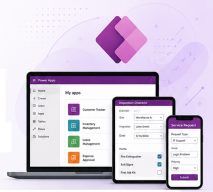
Microsoft Power Apps provides a simple way to create an application by utilizing low-code resources and quicker automation. Companies are now able to create applications much more quickly than before as well as lower the costs associated with it.
| Traditional Apps | Microsoft Power Apps |
| Heavy Coding Required | Uses low-code development |
| App development takes months | Faster app development |
| Higher development cost | Lower operational cost |
| Depends on developers | Easy for business users |
| Difficult to update | Easy customization |
| Slow workflow changes | Faster workflow updates |
| Complex app maintenance | Simple app maintenance |
How Microsoft Power Platform Helps Replace Legacy Systems?
Legacy systems have been around for a long time and many organizations still rely on them for their operations. These systems can be time-consuming, hard to maintain, and costly to operate. They can also limit the organization's ability to adapt and accelerate digital transformation. This is where, Power Platform helps to replace legacy systems
- Replacing Legacy Software Systems
Microsoft Power Platform assists organizations in transitioning from legacy software systems. Organizations can create modern applications, and automate workflows using low-code tools.
- Modernize Manual Procedures
Through modern digital workflows and automated software, organizations can eliminate their dependency on traditional paper-based forms, emails, spreadsheets, and manual approvals.
- Decrease the Dependence on Outdated Infrastructure
Traditional Software systems often require expensive servers and maintenance. Microsoft Power Platform is a cloud-based software solution that helps minimize dependence on external infrastructure.
- Supports Faster Changes
Traditional systems often require more time to update and maintain. Whereas the Microsoft Power Platform enables companies to make changes to their operations quickly.
Digital Transformation Trends Businesses Should Know
At Present, companies utilizing new technologies for automating operations and increasing their productivity. The following are a few examples of current digital transformation trends:
- AI - Automated Tasks
Companies utilize AI to automate specific tasks, improve business reporting and reduce manual efforts.
- Hyper-Automation
Companies automate their entire operation processes so that they can operate faster and more efficiently.
- Low-Code Platforms
With these types of tools, companies can quickly create applications and automate their business processes.
- Intelligent workflows
The use of these types of workflows will help improve approvals, notifications and daily business operations.
- Cloud-first operations
Cloud based systems help companies to advance flexibility, remote access, and increase their level of collaboration.
- Digital workplaces
This type of workplace will support remote working and mobile access. It also allows communication in real-time.
In Summary
Power Platform by Microsoft aids in supporting digital transformation, automation of processes and improve productivity for companies. By automating tasks, Power Platform reduces manual effort, streamlines processes and allows corporate entities to grow faster than before. Through the use of low code tools, automation via AI and accessibility through Cloud technology, companies can now modernize their operations and achieve greater efficiency.
FAQs
1. How does Microsoft Power Platform support digital transformation?
The Microsoft Power Platform supports companies to digitize manual business processes. It helps to remove manual paper processes, streamline workflows and enhance the reporting capabilities.
2. Can Microsoft Power Platform replace manual business processes?
Yes, Organizations can stop depending on using paper forms, spreadsheets, email-based approvals and manual tracking processes. Power Platform helps to automate workflows.
3. How is Power Platform beneficial for efficient Workflow Management?
The use of the Microsoft Power Platform can allow an organization to enhance their workflow through the automation of approvals, notifications or reports. This increases efficiency and reduces the need for manual work.
4. Does Microsoft Power Platform support remote work?
Microsoft Power Platform enables remote work and hybrid workplaces via cloud based access and mobile friendly apps.
5. What ways does Power Platform help to enhance customer experiences?
Microsoft Power Platform allows for companies to create customer portals, AI chatbots and self-service systems as well as automating support workflows.
6. Does Microsoft Power Platform provide solutions for replacing legacy systems?
Yes, Businesses can modernize outdated system and improve operational efficiency by utilizing low code applications such as Power Apps, a component of Microsoft Power Platform.
7. How does Power Platform help businesses become data-driven?
Power Platform allows companies to manage processes, measure outcomes and create dashboards & reports on an instant basis.
8. Is Microsoft Power Platform suitable for digital workplaces?
Yes, Power Platform enables digital workplaces to enhance communication, collaboration, automation and access to business applications remotely.
9. How does AI support Microsoft Power Platform?
AI can support automation of repetitive tasks, improve processes and efficiency, provide insights and simplify business process
10. Why do modern businesses choose Microsoft Power Platform?
Today's companies adopt Microsoft Power Platform because it is a great way to automate, increase productivity, create more flexible and digitally transform their workflow.