
Modern businesses are changing at a very high rate. Companies want faster business processes, greater productivity, and better experiences for customers. Additionally, many companies try to reduce the amount of manual work that occurs and wish to improve workflow automation.
Traditional software development methods may take a long time to develop and quite expensive. Many companies still use outdated systems such as spreadsheets, emails, paperwork, and multiple systems that do not connect. These older styles of doing things slow the rate of growth for a business. Because of this, many companies have turned to Microsoft Power Apps.
Microsoft Power Apps helps companies to develop apps much faster and automate their daily operations using less code. It enhances workflow automation, employee productivity, digital transformation, and business management.
This blog explains the Microsoft Power Apps benefits for modern businesses.
What is Microsoft Power Apps?
Microsoft Power Apps is a low-code application development platform from Microsoft. It allows companies to develop tailored applications in no time and with minimal coding papers.
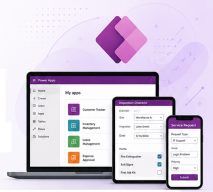
What can we build by utilizing Microsoft Power Apps services?
- Mobile apps
- Web applications
- Systems of approval
- Employee portals
- Dashboards for reporting
- Inventory management systems
- Workflow automation tools
Power Apps is a component of Microsoft Power Platform. It integrates into:
- Microsoft 365
- SharePoint
- Teams
- Excel
- Dynamics 365
- Power BI
- SQL Server
- Azure
They can use one central platform to automate workflow and operational enhancements.
Why Modern Businesses Need Automation?
Companies on a daily basis now handle large amounts of data, employees, approvals, reports, and workflows. The delays caused through the manual processes lead to operational problems.
Automation benefits companies in the following ways:
- Reduction of manual work
- Improve productivity
- Time saving
- Errors reduction
- Improve on reporting
- Improve efficiency
Modern companies focus a lot on workflow automation and digital transformation. This is one of the main reasons why Power Apps development services are becoming very popular.
Challenges Businesses Face Without Modern Applications
Before understanding the benefits of Microsoft Power Apps, let us first understand what common problems companies face without modern business applications.
Manual Work Slows Down Operations
Many companies still rely on spreadsheets, paperwork, emails, and manual approvals. Thus, employees spend hours or days in managing:
- Reports
- Approvals
- Entering data
- File keeping
- Tracking workflow
It lowers productivity and raises operational delays.
Errors Are Common
Mistakes and missing information often result from manual processes. Some of the typical problems include:
- Duplicate records
- Incorrect data entry
- Missing receipts
- Delays in approvals
- Reports that are not detailed enough
These issues affect workflow efficiency and overall business performance.
Poor Communication and Collaboration
Communication gaps are created by disconnected systems between teams and departments. For employees, there is difficulty in:
- Approval tracking
- Workflow updates
- Exchange of information
- Task monitoring
- Business processes
That impacts collaboration and visibility into operations.
High Software Development Costs
Traditional app development is costly and quite time-consuming. Companies spend the money heavily on:
- Developers
- Infrastructure
- Maintenance
- Testing
- Software upgrade
This results in higher operational and development costs.
Slow Business Processes
Manual approvals and outdated workflows slow down business operations. Employees often have to wait for a longer period for:
- Approvals
- Responses
- Expense processing
- Workflow’s updates
- Report generation
This impacts productivity, efficiency, and the customer experience.
Benefits of Microsoft Power Apps for Modern Businesses
Microsoft Power Apps helps to solve the above challenges faced by companies. Let us understand the major benefits.
Faster Application Development
Development of applications is the most efficient benefit of Microsoft Power Apps. Traditional software development may take months. Power Apps helps companies to develop applications within a short time. In addition, need to choose the right power apps development company India for maximum benefit.
It is possible to create rapidly:
- Approval application
- Employee Portals
- Reporting systems
- Inventory applications
- Applications for expense management
- HR management systems
This increases the speed of business operations and efficiency.
Low-Code Development Platform
Power Apps is a low-code app development tool. Firms can develop applications with minimal coding.
Whereas, Benefits of Low-Code Development Platforms:
- Shorten development time
- Decrease coding complexities
- Less dependency on developers
- Enhance operational flexibility
Low-code development is becoming very important as companies seek faster digital solutions.
Improved Workflow Automation
Workflow automation is a must for modern companies. Power Apps help companies to automate:
- Approvals
- Notifications
- Employee onboarding
- Leave applications
- Expense claim
- Reporting related workflows
Automation reduces manual work and enhances efficiency. This allows employees to concentrate more on important areas and not on repetitive work.
Better Employee Productivity
Employees lose time when a process is manual and slow. Whereas, Power Apps streamline workflows. Hence, it saves time and enhance the employee’s productivity.
It is easy for employees to
- Submit requests faster
- Follow approvals
- Have instant access to information
- Complete work faster
Power Apps Business Solutions improves the overall performance of the business.
Cost-Effective App Development
Traditional software development involves costs that can be very high. With Microsoft Power Apps, you can reduce the cost of developing applications significantly.
Your company will spend less on:
- Developers
- IT Systems
- Maintenance of IT Systems
- Testing of IT Systems
- Upgrades of IT Systems
This ensures power apps a cost effective business solution.
Easy Integration with Microsoft Products
Numerous companies utilize Microsoft tools on a daily basis. PowerApps can seamlessly integrate with:
- Microsoft Teams
- SharePoint
- Outlook
- Excel
- Power BI
- Dynamics 365
By integrating these tools together, there is much better connectivity between operations and much more efficient workflow processes. Employees can access all their information from a single source.
Mobile Friendly Applications
Employees work from different locations. PowerApps can be used by companies to build a mobile optimized application that can run on:
- Smart Phones
- Tablets
- Laptop Computers
- Desktop Computers
Employees can access the applications at any point, from any location. This allows for greater flexibility and supports remote workers.
Better Data Management
Each day, companies produce vast quantities of data. Using Power Apps to assist with managing information allows companies to:
- Get information quickly
- Decrease duplicate records
- Create more accurate reports
- Centralize data for the organization.
- Store Information Securely
All of this will enhance operational visibility and support better decision-making.
Real-Time Reporting and Analytics
To enhance operational visibility, companies want to see all aspects of their business at any time.
Power Apps enables companies to track:
- Workflow Status
- Employee Requests
- Approval Process
- Reports
- Operational Data
With access to real-time dashboards and analytics, managers will have greater visibility into their operations and more control over their business.
Better Customer Experience
The importance of an exceptional customer experience is fundamental to all companies. By utilizing Power Apps, companies can provide improved customer service.
Using Power Apps, companies can develop:
- Customer Portals
- Service Request Applications
- Customer Support Applications
- Tracking Applications
These types of applications will help your organization provide quicker responses to inquiries and increase your customer’s satisfaction.
Cloud-Based Accessibility
Power Apps are cloud based. It can be accessed from any location or device with internet access.
Cloud applications deliver:
- Access from anywhere
- Increased flexibility
- Safe storage
- Update in real time
- Upgradable automatically
Cloud oriented platforms support modern business operations and hybrid workforce.
Better Scalability
Companies continue to grow year on year. Applications created with Power Apps can scale easily.
Companies can:
- Add users quickly
- Add additional departments
- Control higher data volumes
- Expand workflows
- Update applications
This will help to grow your business in the future.
Strong Security Features
Business data security is very important. Organizations need to ensure that they safeguard their employees' personal data, finances, and operations from unauthorized access and potential threats.
Microsoft Power Apps delivers robust security features, including:
- Data encryption
- User Authentication
- Role-based permissions
- Secure cloud storage
- Access control
By using these features, companies can secure their confidential data and increase compliance.
Improved Business Visibility
Most companies have difficulty in tracking operational activities and workflows effectively.
Through better visibility of Operations/Workflows Manager's can effectively monitor and manage.
- Workflow Status
- Employee Activity
- Pending Approvals
- Reports
- Operational Performance
This allows for more effective management of operations for both the managers and their workforce.
Easy Customization
The workflows and operational needs of each company differ. Companies can develop custom apps to their specific needs using Power Apps.
Companies able to customize
- Forms
- Dashboards
- Reports
- Approval work flows
- User Roles
This offers more flexibility and more operational control.
Reduces Dependency on Traditional Development
Today, Most forms of application development have relied heavily on technical development teams and complex coding methodologies. Microsoft Power Apps provides companies with a more efficient, low-code way to build applications than traditional methods.
With Power Apps, companies can also enhance:
- Workflow automation
- Application development
- Process management
- Operational efficiency
- Internal collaboration
By using Power Apps, companies speed up the development process and advance business productivity.
Support Digital Transformation
Digital transformation is becoming very important to modern companies.
Power Apps enable organizations to replace:
- Paper-based processes
- Manual approval processes
- Mismanaged spreadsheets
- Email processes
This leads to modernising your operation as well as creating greater operational efficiency.
Better Operational Efficiency
Today's companies strive for greater operational efficiency as a main focus.
Power Apps provides greater operational efficiency through:
- Workflow automation
- Less downtime
- Improved communication
- Simplified processes
- Less manual work
With this increased operational efficiency, companies will be able to operate more productively.
Easy Maintenance and Updates
App built utilizing power apps are very much easier to maintain.
Companies can:
- Quickly update their workflows
- Easily modify reports
- Add features at a faster pace
- Allow for continuous system improvement.
This results in reducing downtime and disruption to business operations.
Supports Remote and Hybrid Work
More and more companies today are implementing remote and hybrid work models. The Microsoft Power App platform provides the necessary support for remote workers via cloud hosting and mobile-ready app solutions.
Employees can:
- Access applications from any location
- Submit requests from any location
- Monitor workflows
- Manage approvals
- Access business information
All of these capabilities enable increased flexibility, productivity, and continuity of operations.
Common Use Cases of Microsoft Power Apps
Many types of companies utilize PowerApps for different purposes, including:
- HR Management Systems
- Onboarding employees
- Leave Management
- Expense Management
- Inventory Management
- Asset Management
- Dashboard Reports
- Inspections
- Customer Service Portals
- Automation Workflows
All of these systems help with productivity and efficiency.
Industries Using Microsoft Power Apps
The number of industries utilizing Power Apps is quickly growing; examples include:
- Information Technology/Software
- Health Care
- Manufacturing
- Logistics
- Retail
- Construction
- Education
- Banking
- Consulting
Power Apps helps organizations to improve workflow automation and operational efficiency.
Why Businesses Prefer Power Apps Over Traditional Development
Traditional development process takes time and quite time consuming. Whereas, power apps provide several advantages. Companies prefer Power Apps due to its automation, advanced speed and operational flexibility. Here are the key differences between traditional app development and power apps.
| Traditional Development | Microsoft Power Apps |
|---|---|
| Long development cycle | Faster development |
| High development cost | Lower development cost |
| Complex coding | Low-code platform |
| Slow updates | Easy updates |
| High maintenance effort | Simple maintenance |
| Limited flexibility | Better flexibility |
| More technical dependency | Easy customization |
Future of Microsoft Power Apps
As we know Microsoft Power Apps is a low code development platform. Whereas, the future of Low Code Development appears to be bright. More companies are investing money into automating their processes and making their businesses more digital.
Below are some key industry trends that will shape the future of low-code development:
- AI Powered Automation
- Enhanced Workflow Solutions
- Single-Source Access Mobile Apps
- Instant Data Analytics
- Cloud-Based Platforms
- Progressive Business Automation
Thus, Microsoft Power Apps will remain a core component in modern business operations.
Why Businesses Should Invest in Microsoft Power Apps
The modern business needs to use:
- More efficient processes
- Increased productivity
- Lower operating costs
- Greater transparency of operations
- Better visibility
- Enhanced customer satisfaction
Microsoft Power Apps provides businesses with the means to accomplish all of these goals. By investing in automation now, companies can increase productivity and create a foundation for future growth.
Conclusion
The modern business required more efficient and rapid operations. When using manual processes, productivity will go down, and it also increases operational cost.
Whereas, Microsoft Power Apps assists organizations with automating workflows, generating reports and eliminating manual processes. In addition, it enables organisations to proceed with the digital transformation.
With Microsoft Power Apps, companies can achieve:
- A faster process for creating applications
- Greater levels of automation
- Increased productivity
- Lower costs for developing applications
- Greater visibility into operational performance
- A superior employee experience
- Greater scalability
- A higher level of security
Power Apps is quickly becoming one of the best low-code app development platforms for the modern enterprise.
By investing in Microsoft Power Apps, companies can enhance their operational efficiency, decrease their complexity of business operations, and position themselves for future growth.
FAQs
- What is Microsoft Power Apps ?
Microsoft PowerApps is a low code development platform that allows organizations to create custom applications and automate workflow processes with minimal coding.
- Why do companies use Microsoft Power Apps?
Companies utilize PowerApps to automate workflow, improve efficiency, and reduce manual work. It also helps to develop apps more quickly.
- Are Microsoft Power Apps good for small businesses?
Microsoft Power Apps is accessible for small to medium-sized organizations. It helps to reduce development time and costs associated with. It also helps to improve operational efficiencies across an organization.
- Can Power Apps integrate with Microsoft 365 and other platforms?
Yes, Microsoft Power Apps can easily be connected to Microsoft 365, Microsoft Teams, SharePoint, Microsoft Outlook, Microsoft Excel, and Power BI.
- How does Power Apps improve workflow automation?
PowerApps is used for automating the process of approving reports, notifications, requests and repeating business processes. Thus, it improves the overall productivity.
- Is Microsoft Power Apps cloud-based?
Yes, Microsoft PowerApps operates as a cloud-based service which allows users to access data from any location by offering real-time synchronization.
- Does Power Apps support mobile applications?
Yes; companies can build applications that run on mobile devices via Microsoft Power Apps.
- Is Microsoft Power Apps a secure platform?
Yes, Microsoft Power Apps includes numerous security features, including encryption, authentication, access control, and secure cloud storage.
- Which type of industries utilize Microsoft Power Apps?
Power Apps can be used by many different types of industries such as healthcare, information technology (IT), retail, manufacturing, logistics, banking, and education.
- Why is low-code development becoming popular?
Low-code development simplifies the coding process, reduces time to create an application, lower development cost, and improves automated workflow processes.