
Strategic sourcing has always depended on data, supplier intelligence, market analysis, and careful decision-making. But as procurement teams manage larger supplier networks, volatile markets, rising costs, and increasing compliance requirements, traditional sourcing methods are becoming harder to scale.
Artificial intelligence is changing that.
AI is transforming strategic sourcing software from a system used primarily to organize procurement data into a more intelligent platform that can analyze information, identify patterns, predict risks, recommend actions, and automate repetitive work. The result is a sourcing process that can be faster, more data-driven, and more responsive to market changes.
For procurement leaders, the shift is significant. AI is not simply adding another feature to sourcing software. It is changing how organizations discover suppliers, evaluate bids, negotiate contracts, manage risk, and make sourcing decisions.
What Is Strategic Sourcing Software?
Strategic sourcing software helps organizations manage the process of finding, evaluating, selecting, and managing suppliers. It typically supports activities such as supplier discovery, requests for information and proposals, bidding events, spend analysis, supplier evaluation, contract management, and performance tracking.
Traditional strategic sourcing software provides procurement professionals with structured data and workflows. Users still need to analyze large datasets, compare supplier responses, identify risks, and determine the best sourcing strategy.
AI adds another layer of intelligence to these processes.
Instead of simply presenting information, AI-powered sourcing platforms can interpret it and provide recommendations. This allows procurement professionals to spend less time collecting and processing information and more time making strategic decisions.
1. Automated Spend Analysis
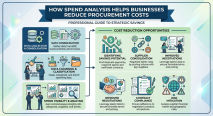
Spend analysis is one of the most important foundations of strategic sourcing. Procurement teams need to understand what they are buying, from whom, at what price, and under which contracts.
Historically, this process could require significant manual effort. Procurement analysts might need to consolidate data from enterprise resource planning systems, purchasing platforms, invoices, spreadsheets, and other sources.
AI can automate much of this work.
Machine learning algorithms can classify transactions, identify suppliers, detect duplicate records, and group similar products and services. Natural language processing can also interpret descriptions that use different terminology for the same category.
For example, an organization might have separate records for "laptop computers," "notebook PCs," and specific laptop models. AI can identify the relationship between these records and create a more accurate view of total technology spending.
This gives procurement teams better visibility into spending patterns and potential savings opportunities.
2. Smarter Supplier Discovery
Finding the right suppliers can be time-consuming, particularly for complex or specialized categories.
AI can analyze supplier databases, historical sourcing events, product information, certifications, geographic coverage, financial indicators, and other data points to identify suppliers that match specific sourcing requirements.
Instead of relying only on manually maintained supplier lists, procurement professionals can use AI-powered systems to discover potential suppliers based on multiple criteria.
AI can also identify less obvious sourcing opportunities. A supplier that has not previously worked with an organization may have the right capabilities, certifications, capacity, and geographic presence for a particular requirement.
This expands the supplier pool while reducing the manual research required during supplier discovery.
3. Intelligent Supplier Evaluation
Supplier selection involves more than comparing quoted prices. Procurement teams may need to evaluate quality, delivery performance, financial stability, sustainability practices, compliance, capacity, geographic risk, and previous performance.
AI can bring these variables together to create a more comprehensive supplier assessment.
For example, an AI-enabled sourcing platform could analyze historical delivery data, quality incidents, contract performance, financial information, and external risk indicators. It can then highlight suppliers that appear financially stable but have recurring delivery problems.
This gives procurement professionals a more complete picture of supplier performance.
AI does not eliminate human judgment. Instead, it helps procurement teams identify the factors that deserve closer attention.
4. Better RFP and RFQ Management
Creating requests for proposals and requests for quotations can involve repetitive work. Procurement professionals need to develop requirements, define evaluation criteria, prepare supplier questions, and review responses.
Generative AI can help draft sourcing documents based on previous events, category requirements, organizational standards, and user instructions.
It can also analyze supplier responses and summarize differences across proposals.
For example, an AI system could compare ten supplier proposals and highlight differences in pricing, payment terms, lead times, warranties, service levels, and exceptions.
This does not mean procurement professionals should accept AI-generated analysis without review. The value comes from reducing the amount of manual comparison required, allowing experts to focus on the commercial and strategic implications.
5. AI-Powered Cost and Price Analysis
Price analysis is central to strategic sourcing, but determining whether a supplier's quotation is competitive can be difficult.
AI can analyze historical purchase prices, market data, supplier quotations, demand patterns, commodity prices, and other relevant variables to identify pricing anomalies.
Suppose a supplier quotes a 12% increase for a particular component. An AI-powered sourcing platform may compare the proposal against historical prices and current market conditions and flag the increase for review.
Advanced systems can also support should-cost analysis by estimating what a product or service should reasonably cost based on relevant cost drivers.
This gives procurement teams stronger evidence during supplier negotiations.
6. More Effective Negotiations
Negotiation remains a human activity, but AI can provide procurement professionals with better preparation and decision support.
AI can analyze historical negotiations, supplier pricing, contract terms, market conditions, and organizational purchasing patterns to identify negotiation opportunities.
It may highlight areas where a supplier has historically offered concessions or identify contract terms that differ significantly from organizational standards.
Generative AI can also help procurement professionals prepare negotiation questions, summarize supplier positions, and model different scenarios.
For example, a procurement professional could evaluate the potential impact of securing a lower unit price versus extending payment terms or changing minimum order quantities.
The technology does not replace negotiation expertise. It gives negotiators better information before and during the conversation.
7. Predictive Supplier Risk Management
Supplier risk has become a major concern for procurement organizations. Disruptions can result from financial instability, geopolitical events, regulatory changes, natural disasters, cyber incidents, transportation problems, or capacity constraints.
Traditional supplier risk monitoring often relies on periodic reviews. AI enables more continuous analysis.
AI systems can monitor large volumes of internal and external data and identify patterns that may indicate emerging supplier risk.
For example, a combination of deteriorating financial indicators, declining delivery performance, and negative market signals could trigger an early warning.
Procurement teams can then investigate the issue and develop mitigation strategies before a disruption affects operations.
This moves supplier risk management from a reactive process toward a more predictive model.
8. Contract Intelligence
Contracts contain critical commercial information, but important terms can be difficult to monitor across hundreds or thousands of supplier agreements.
AI-powered contract analysis can extract information such as pricing clauses, renewal dates, termination conditions, service-level agreements, payment terms, volume commitments, and penalties.
Natural language processing can identify unusual or potentially unfavorable clauses and compare contract language against organizational standards.
AI can also provide alerts for upcoming renewals or price adjustments.
This helps procurement teams reduce missed deadlines, improve compliance, and identify opportunities for renegotiation.
9. Procurement Automation
One of the most immediate benefits of AI is the automation of repetitive procurement tasks.
AI-powered strategic sourcing software can automate activities such as data classification, supplier communication drafts, document summarization, bid comparison, report generation, and sourcing event preparation.
This matters because procurement professionals often spend significant amounts of time on administrative activities.
By automating low-value repetitive work, AI allows procurement teams to focus on supplier relationships, category strategy, risk management, and business outcomes.
10. From Reactive Sourcing to Predictive Sourcing
Perhaps the biggest transformation AI brings to strategic sourcing is the shift from reactive decision-making to predictive decision-making.
Traditional sourcing often responds to events after they happen. A supplier increases prices, delivery performance declines, or market conditions change, and procurement responds.
AI can identify signals earlier.
By analyzing historical and real-time data, AI can help forecast demand, anticipate price movements, identify potential supply disruptions, and highlight suppliers that may require intervention.
This allows procurement organizations to plan sourcing strategies before problems become urgent.
Challenges of Using AI in Strategic Sourcing
Despite its benefits, AI adoption comes with challenges.
Data quality is one of the biggest. AI models depend on accurate and consistent data. Poor supplier records, incomplete transaction histories, and inconsistent category classifications can reduce the reliability of AI-generated recommendations.
Data security is another important consideration. Procurement platforms may contain sensitive pricing, contract, supplier, and business information. Organizations need strong access controls, governance policies, and security practices when deploying AI.
There is also the issue of explainability. Procurement professionals need to understand why an AI system recommends one supplier over another. Black-box recommendations can create problems when decisions involve significant financial or operational consequences.
Finally, AI should support human expertise rather than replace it. Strategic sourcing involves commercial judgment, supplier relationships, organizational priorities, and context that may not be fully represented in historical data.
The Future of AI-Powered Strategic Sourcing
AI is likely to become increasingly embedded across the sourcing lifecycle.
Future strategic sourcing platforms will move beyond isolated AI features and provide intelligent assistance across spend analysis, supplier discovery, sourcing events, negotiations, risk management, and contract management.
AI agents may eventually handle multi-step sourcing workflows, such as identifying a sourcing opportunity, researching suppliers, preparing an RFP, analyzing responses, and presenting recommendations for procurement approval.
Human oversight will remain essential, particularly for high-value purchases and decisions involving significant supplier or business risk.
The competitive advantage will come from combining AI capabilities with strong procurement processes, high-quality data, and experienced professionals.
Conclusion
AI is fundamentally changing strategic sourcing software. It is helping procurement organizations analyze spend faster, discover suppliers more effectively, evaluate supplier risk, improve negotiations, automate repetitive work, and make more predictive sourcing decisions.
The most valuable impact is not simply automation. It is better decision-making.
Organizations that combine AI-powered sourcing technology with reliable data, clear governance, and human expertise can build procurement processes that are more responsive, informed, and resilient.
As AI capabilities continue to mature, strategic sourcing software will increasingly function as an intelligent decision-support system rather than just a digital workflow tool. For procurement leaders, adopting this shift can create opportunities to reduce costs, manage risk, strengthen supplier relationships, and contribute greater strategic value to the business.