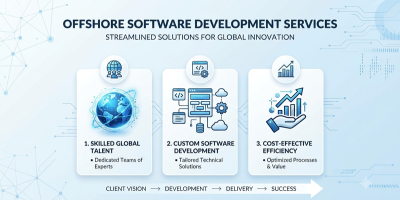
Businesses across the USA, UK, Australia, Europe, and other global markets are increasingly exploring offshore software development to reduce development costs, access specialized technical expertise, and accelerate digital transformation. Among the popular outsourcing destinations, India has established itself as an important choice for businesses seeking reliable software development capabilities.
Offshore software development companies in India help organizations build, maintain, and scale digital products through dedicated development teams, project-based engagement models, and customized software solutions. From startups developing their first SaaS product to established enterprises modernizing their technology infrastructure, Indian software development companies offer a range of services to support different business requirements.
However, choosing the right offshore development partner requires more than comparing hourly rates or reviewing company portfolios. Businesses must evaluate technical expertise, communication practices, development processes, security standards, and long-term scalability.
In this guide, we will explore why India is a preferred offshore software development destination, the services Indian companies offer, associated costs, and the key factors to consider before selecting a development partner.
What Is Offshore Software Development?
Offshore software development is a business arrangement in which an organization hires a software development company located in another country to handle some or all of its software development requirements.
Instead of building an entire in-house development department, businesses collaborate with an external technology partner that provides developers, designers, project managers, quality assurance specialists, and other technical professionals.
For example, a company based in the United States can partner with an Indian software development company to build a web application, develop a mobile app, integrate third-party systems, or maintain an existing software platform.
The offshore development partner manages the technical implementation while the client remains involved in defining business objectives, product requirements, and project priorities.
How Does Offshore Software Development Work?
A typical offshore software development engagement follows these steps:
-
Requirement Analysis: The client shares business objectives, project requirements, technical expectations, and delivery timelines.
-
Team Selection: The offshore company identifies suitable developers and technical specialists based on the project requirements.
-
Project Planning: Both parties finalize the development roadmap, technology stack, milestones, and engagement model.
-
Development and Testing: The offshore team develops the software, performs quality assurance, and shares regular progress updates.
-
Deployment: The completed application is deployed to the required production environment.
-
Maintenance and Support: The development partner provides ongoing technical support, updates, and performance improvements as agreed.
This approach allows businesses to access development capabilities without investing heavily in permanent infrastructure and recruitment.
Why Choose India for Offshore Software Development?
India has become an important destination for offshore software development because of its established IT services industry, technical talent pool, and experience working with international clients.
Businesses looking for offshore software development services in India can find companies specializing in different technologies, industries, and development methodologies.
Here are some of the major reasons organizations consider India for their software development requirements.
1. Access to Skilled Software Developers
India has a large technology workforce with experience across several programming languages, frameworks, platforms, and development environments.
Businesses can find developers specializing in:
-
Java, Python, PHP, and JavaScript
-
React, Angular, and Vue.js
-
Node.js, .NET, and Laravel
-
Android and iOS development
-
Cloud computing and DevOps
-
Artificial intelligence and machine learning
-
Data engineering and analytics
This technical diversity makes it easier for businesses to identify developers who match their specific project requirements.
2. Cost-Effective Software Development
Hiring an in-house development team in countries such as the USA, UK, or Australia can involve significant expenses, including salaries, recruitment, employee benefits, office infrastructure, and training.
Offshore software development in India can provide access to qualified technical professionals at comparatively competitive development rates.
Businesses can allocate their technology budgets more efficiently while maintaining access to experienced development resources.
However, cost savings should not be the only selection criterion. Development quality, project management, communication, and long-term maintenance also influence the overall value of an offshore engagement.
3. Flexible Engagement Models
Indian offshore software development companies generally offer different engagement models to accommodate varying project requirements.
Businesses can choose from:
-
Dedicated development teams
-
Fixed-price development projects
-
Time-and-material engagement
-
Staff augmentation
-
Long-term development partnerships
These options allow organizations to select an arrangement based on their budget, project complexity, and internal technical capabilities.
4. Experience Working with International Clients
Many Indian software development companies serve clients across North America, Europe, Australia, and other international markets.
This experience helps them understand different business expectations, communication practices, documentation requirements, and delivery processes.
Companies with established international client relationships may also have experience coordinating meetings across time zones and following globally recognized development practices.
5. Scalability and Faster Team Expansion
Business requirements can change throughout the software development lifecycle.
A startup might initially need two developers but require additional frontend developers, backend engineers, and QA specialists as its product grows.
Offshore development partnerships can make it easier to expand or adjust development capacity without following the complete recruitment process for every additional resource.
Benefits of Hiring an Offshore Software Development Company in India
Choosing the right offshore development partner can provide several operational and technical advantages.
1. Reduced Development Costs
One of the primary reasons businesses outsource software development is to manage technology expenses.
Working with an offshore software development company in India can help reduce costs associated with recruitment, employee benefits, infrastructure, and maintaining a large in-house engineering department.
Organizations can invest more resources in product strategy, marketing, customer acquisition, and business expansion.
2. Focus on Core Business Activities
Software development involves multiple responsibilities, including requirement analysis, coding, testing, deployment, and maintenance.
Managing all these activities internally can consume significant management time.
By outsourcing development responsibilities, business owners and internal teams can focus on strategic priorities while the offshore partner manages the agreed technical work.
3. Faster Product Development
An experienced offshore development company may already have established development workflows, reusable components, quality assurance processes, and project management systems.
These capabilities can help businesses reduce development bottlenecks and move from planning to product delivery more efficiently.
The actual delivery timeline will depend on project complexity, resource availability, and the quality of requirements.
4. Access to Specialized Technical Expertise
Some projects require expertise that may not be available within an organization's existing development department.
For example, a business developing an AI-powered application may need machine learning engineers, data scientists, cloud architects, and backend developers.
An offshore development partner can help businesses access these specialized skills without building every capability internally.
5. Long-Term Technical Support
Software development does not end after an application goes live.
Applications require regular updates, bug fixes, security improvements, performance optimization, and compatibility testing.
A long-term offshore development partnership can provide ongoing technical support and help businesses maintain their software infrastructure.
6. Greater Development Flexibility
Offshore engagement models allow businesses to adjust development resources based on changing requirements.
Companies can begin with a small development team, expand during major releases, and reduce resource requirements when development priorities change.
This flexibility can be particularly valuable for startups, growing businesses, and organizations managing multiple software projects.
Services Offered by Indian Offshore Software Development Companies
Indian software development companies provide a wide range of technology services to businesses across different industries.
Before selecting a development partner, it is important to understand the services available and identify which capabilities align with your project objectives.
1. Custom Software Development
Custom software development involves building applications specifically designed around an organization's business processes, operational requirements, and customer needs.
Unlike ready-made software, custom applications can be developed with specific functionalities, integrations, workflows, and scalability requirements.
Common custom software solutions include:
-
Enterprise resource planning systems
-
Customer relationship management platforms
-
Inventory management applications
-
Business automation software
-
Workflow management systems
-
Enterprise web applications
A reliable custom software development company in India can help businesses plan, develop, test, and maintain applications according to their operational requirements.
2. Web Application Development
Web applications allow businesses to deliver digital services through browsers without requiring users to install traditional desktop software.
Offshore development companies provide web application development services using technologies such as React, Angular, Vue.js, Node.js, Python, PHP, and .NET.
Common web application projects include:
-
SaaS platforms
-
E-commerce applications
-
Customer portals
-
Business dashboards
-
Online booking platforms
-
Enterprise management systems
Professional web application development focuses on usability, responsive design, performance, security, and scalability.
3. Mobile App Development
Mobile applications help businesses connect with customers, streamline operations, and provide digital services through smartphones and tablets.
Indian offshore development companies offer native and cross-platform mobile application development.
Services may include:
-
Android application development
-
iOS application development
-
Flutter app development
-
React Native app development
-
Mobile UI/UX design
-
Mobile application maintenance
Businesses should evaluate a development company's previous mobile projects, platform expertise, testing capabilities, and app deployment experience before hiring.
4. AI and Machine Learning Development
Artificial intelligence and machine learning are increasingly being incorporated into modern business applications.
Offshore development companies can help organizations build AI-powered solutions for automation, predictive analytics, data processing, and customer engagement.
Common AI and ML development services include:
-
AI-powered chatbots
-
Recommendation engines
-
Predictive analytics systems
-
Natural language processing
-
Computer vision applications
-
Intelligent workflow automation
-
Generative AI integrations
Businesses should look for development partners with practical experience in deploying and maintaining AI solutions, not just experimental implementations.
5. Cloud and DevOps Services
Cloud infrastructure enables businesses to deploy applications, manage computing resources, and scale their systems based on demand.
Offshore software development companies may provide cloud and DevOps services involving platforms such as AWS, Microsoft Azure, and Google Cloud.
Typical services include:
-
Cloud application development
-
Cloud migration
-
Infrastructure management
-
CI/CD pipeline implementation
-
Containerization
-
Kubernetes deployment
-
Application monitoring
-
Cloud security optimization
These services help organizations improve infrastructure management and streamline software deployment processes.
How Much Does Offshore Software Development Cost in India?
The cost of offshore software development in India depends on several factors, including project complexity, developer experience, technology requirements, engagement model, and delivery timeline.
There is no single pricing structure applicable to every project.
For example, developing a simple business website requires different resources and technical expertise compared with building a complex SaaS platform or enterprise software application.
Factors That Influence Offshore Software Development Costs
1. Project Complexity
Applications with advanced functionality, complex integrations, custom workflows, and extensive backend requirements generally require more development effort.
2. Technology Stack
The technologies selected for a project can influence resource availability, development complexity, and overall cost.
3. Developer Experience
Senior developers and specialized technical professionals may have higher rates than junior developers because of their experience and expertise.
4. Project Duration
Long-term development projects may involve different pricing arrangements compared with short-term assignments.
5. Team Size
The number of developers, designers, QA engineers, and project managers required will influence the overall project budget.
6. Maintenance Requirements
Post-launch maintenance, security updates, technical support, and infrastructure management should also be included in the overall budget.
How to Optimize Your Offshore Development Budget
Businesses can manage development expenses by following a few practical steps:
-
Define project requirements before requesting quotations.
-
Prioritize essential features for the initial release.
-
Select an engagement model that matches project complexity.
-
Evaluate technical expertise rather than choosing the lowest hourly rate.
-
Establish clear milestones and delivery expectations.
-
Discuss maintenance and support costs in advance.
The goal should be to achieve the right balance between development cost, software quality, and long-term business value.
Offshore vs Onshore Software Development: Which Is Better?
Businesses often compare offshore and onshore software development before selecting an outsourcing strategy.
Both models have advantages, and the right choice depends on the organization's budget, technical requirements, communication preferences, and project management capabilities.
Offshore Software Development
Offshore software development involves working with a development company located in another country.
For example, a US-based company partnering with an Indian software development company follows an offshore development model.
Advantages:
-
Access to international technical talent.
-
Potentially lower development costs.
-
Flexible resource allocation.
-
Access to specialized technical skills.
-
Ability to scale development capacity.
Challenges:
-
Time zone differences.
-
Need for structured communication.
-
Potential cultural and business process differences.
-
Greater importance of documentation and project governance.
Onshore Software Development
Onshore software development involves hiring a development company located in the same country as the client.
Advantages:
-
Similar working hours.
-
Easier in-person communication.
-
Familiarity with local business practices.
-
Convenient coordination for certain projects.
Challenges:
-
Potentially higher development expenses.
-
Limited access to resources in some specialized technology areas.
-
Recruitment and resource availability constraints.
Which model should you choose?
Offshore development can be a suitable option for businesses seeking access to specialized developers, flexible resources, and competitive development costs.
Onshore development may be preferable when local presence, frequent in-person meetings, or specific regulatory requirements are important.
Some organizations also choose a hybrid model, combining an internal product team with an offshore development partner.
How to Evaluate and Select the Right Offshore Software Development Partner?
Selecting the right offshore software development company is one of the most important decisions in an outsourcing project.
The right partner should understand your business requirements, provide relevant technical expertise, maintain transparent communication, and deliver software that supports long-term business objectives.
Here are the most important factors to evaluate before making a decision.
1. Review the Company's Portfolio and Case Studies
Start by reviewing the company's previous projects and technical capabilities.
Look for case studies related to your industry, application type, or technology requirements.
Pay attention to:
-
Project complexity.
-
Technologies used.
-
Business challenges addressed.
-
Development approach.
-
Measurable project outcomes, where documented.
A relevant portfolio provides better evidence of experience than general service descriptions.
2. Evaluate Technical Expertise
Make sure the development company has experience with the technologies required for your project.
For example, if you are building a SaaS platform, you may need expertise in frontend development, backend architecture, database management, cloud infrastructure, and API integrations.
Ask about the proposed technology stack and the technical experience of the developers assigned to your project.
3. Check Client Reviews and Testimonials
Client feedback can provide useful insights into a company's reliability, communication, project management, and delivery quality.
Review independent platforms such as Clutch and Google Business Profile where relevant.
Look for consistent feedback rather than relying on a single testimonial.
4. Understand the Development Process
A professional offshore software development company should have a clearly defined development process.
Ask how the company handles:
-
Requirement gathering.
-
Project estimation.
-
UI/UX design.
-
Development planning.
-
Quality assurance.
-
Deployment.
-
Post-launch support.
Agile development practices can help businesses review progress regularly and respond to changing requirements.
5. Assess Communication and Project Management
Communication is particularly important when working with an offshore development team.
Before signing an agreement, understand how the company manages client communication.
Discuss:
-
Project management tools.
-
Meeting schedules.
-
Reporting frequency.
-
Development progress updates.
-
Escalation procedures.
-
Time zone overlap.
Clear communication reduces misunderstandings and helps maintain project alignment.
6. Review Security and Confidentiality Practices
Software projects may involve confidential business information, customer data, and proprietary source code.
Before beginning an engagement, evaluate the company's approach to information security.
Important considerations include:
-
Non-disclosure agreements.
-
Access control policies.
-
Secure development practices.
-
Data encryption.
-
Source code ownership.
-
Backup and recovery procedures.
-
Applicable regulatory requirements.
If your project involves sensitive information or regulated data, verify the relevant contractual and compliance obligations.
7. Discuss Pricing and Engagement Terms
Request a detailed proposal explaining the development scope, resource allocation, pricing structure, milestones, and payment terms.
Avoid selecting a company based solely on the lowest quotation.
An unusually low estimate may exclude important services such as quality assurance, documentation, deployment, or maintenance.
8. Evaluate Long-Term Support Capabilities
Software applications need continuous improvement after launch.
Discuss the company's ability to provide ongoing maintenance, technical support, performance monitoring, and feature enhancements.
A development partner with a long-term support approach can help maintain software quality as your business evolves.
Common Challenges in Offshore Software Development and How to Overcome Them
Offshore software development offers several advantages, but businesses should also prepare for potential challenges.
Understanding these issues before starting a project can help establish a more effective working relationship.
1. Time Zone Differences
Working with an offshore team in India may involve differences in working hours, particularly for clients based in North America and Europe.
Solution: Establish overlapping working hours, schedule regular meetings, and use asynchronous communication tools for daily updates.
2. Communication Gaps
Misunderstandings can occur when requirements are unclear or project updates are inconsistent.
Solution: Maintain detailed documentation, define deliverables, and establish clear communication channels from the beginning.
3. Quality Control Issues
Software quality can suffer when testing and code review processes are not properly managed.
Solution: Establish quality standards, conduct regular code reviews, implement automated testing, and define acceptance criteria for each milestone.
4. Project Delays
Unclear requirements, changing priorities, and unexpected technical issues can affect delivery schedules.
Solution: Divide the project into manageable milestones, maintain a realistic development roadmap, and review progress regularly.
5. Data Security Concerns
Sharing business information and granting remote access to systems can create security risks if proper controls are missing.
Solution: Use role-based access controls, secure development environments, appropriate contractual safeguards, and documented security procedures.
6. Lack of Project Visibility
Clients may find it difficult to monitor progress when development activities are not communicated regularly.
Solution: Use project management platforms, sprint reviews, progress reports, and regular demonstrations to maintain transparency.
Why Partner with an Indian Software Development Company?
India offers businesses access to a broad technology services ecosystem, experienced software professionals, and flexible development arrangements.
However, the value of an offshore partnership ultimately depends on the capabilities of the individual development company.
A suitable Indian software development partner should combine technical expertise with a clear understanding of business objectives.
Before making your decision, evaluate the company's experience, development methodology, communication practices, security standards, pricing transparency, and ability to provide long-term support.
The right partnership can help your organization build scalable applications, improve operational efficiency, and bring digital products to market more effectively.
If you are planning a new software project or looking to expand your existing development capabilities, consider working with an experienced offshore software development company in India that understands your business requirements and technical goals.
Ready to discuss your next software development project? Connect with our experts to explore the right technology approach, engagement model, and development strategy for your business.
Frequently Asked Questions (FAQs)
1. Why should businesses hire offshore software development companies in India?
Businesses choose Indian offshore software development companies for access to technical talent, competitive development costs, flexible engagement models, and experience delivering software solutions for international clients.
2. What services do offshore software development companies in India offer?
Common services include custom software development, web application development, mobile app development, SaaS development, AI and machine learning, cloud computing, DevOps, software testing, and application maintenance.
3. How much does offshore software development cost in India?
The cost depends on project complexity, technology stack, developer experience, team size, project duration, and engagement model. Businesses should request a customized estimate based on their specific requirements.
4. How do I choose the best offshore software development company in India?
Evaluate the company's technical expertise, portfolio, client reviews, communication process, project management practices, security standards, pricing transparency, and post-development support.
5. Is offshore software development in India suitable for startups?
Yes. Startups can use offshore development to access technical expertise, build minimum viable products (MVPs), develop SaaS applications, and expand engineering capacity without immediately establishing a large in-house department.
6. What is the difference between offshore software development and outsourcing?
Outsourcing refers to assigning business or technical activities to an external service provider. Offshore software development is a specific type of outsourcing in which the development partner is located in another country.
7. How do offshore development companies manage time zone differences?
They typically use overlapping working hours, scheduled meetings, project management tools, shared documentation, and asynchronous communication to coordinate with international clients.
8. Is offshore software development secure?
Offshore software development can be secure when appropriate measures are implemented, including access controls, encryption, secure coding practices, confidentiality agreements, and compliance with applicable data protection requirements.
9. What engagement models are available for offshore software development?
Common engagement models include fixed-price projects, time-and-material contracts, dedicated development teams, and staff augmentation. The appropriate model depends on project scope and business requirements.
10. Can I hire a dedicated software development team in India?
Yes. Many Indian software development companies provide dedicated teams consisting of developers, designers, QA engineers, and project managers who work on a client's requirements for an agreed engagement period.