
Every day, the finance and accounting teams manage huge amounts of data. In the finance departments, they will handle tasks such as invoicing, payments, budget management, and financial reporting.
Many finance departments still operate manually, using spreadsheets and multiple disconnected systems to complete their daily tasks. These methods can make things harder, like slowing down the work process, increasing errors, and decreasing the ability of the finance teams to get accurate financial information.
Today, companies are using modern digital solutions to streamline their finance processes. One of the most extensive solutions available is the Microsoft Power Platform.
The Microsoft Power Platform provides the ability to finance teams to automate their business processes, analyze their financial data, and build & deploy applications that help automate their daily tasks. Furthermore, it also helps to make more informed decisions about their finances. As a result, it has become a much easier way for companies to manage their financial data and improve their productivity.
In this blog, we will look at how the Power Platform provides solutions for finance and accounting teams to improve their ability to work efficiently and support the overall financial management of an organization.
What is Microsoft Power Platform?
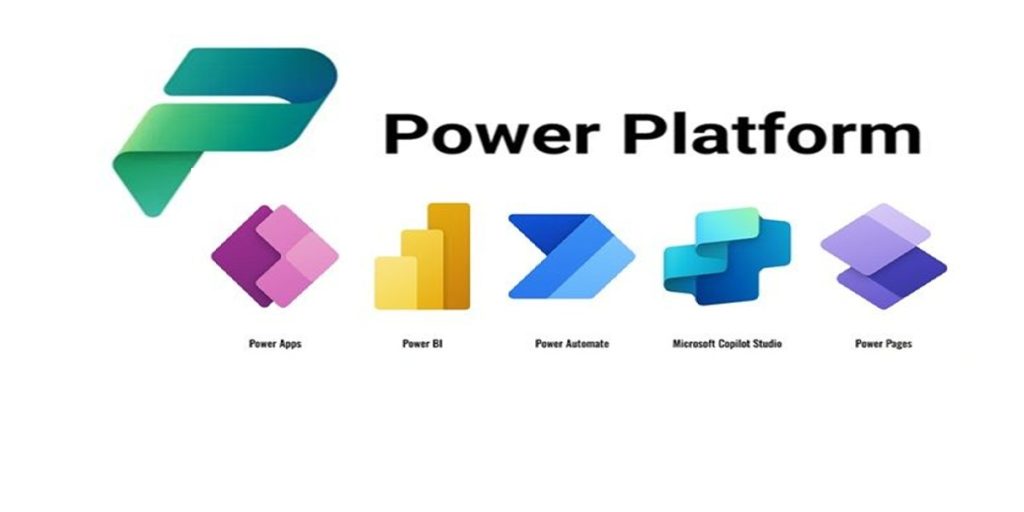
The Microsoft Power Platform is a set of tools built by Microsoft to allow companies to discover insights from their data, automate business processes, and design applications.
The Microsoft Power Platform contains four key tools:
- Power BI: A business intelligence platform that builds dashboards, reports, and visualizations
- Power Apps: An application development platform that allows users to create custom applications without requiring coding knowledge
- Power Automate: An online platform that provides a means to create automated workflows (or actions) between applications and services.
- Power Virtual Agents: An online platform that facilitates the use of artificial intelligence to support customer service applications.
The Microsoft Power Platform is designed to work as a collection of tools to streamline business processes and help organizations utilize their data in a more effective manner.
For teams working within financial and accounting functions, these four tools will help automate financial processes, improve reporting, and minimize the amount of time spent on manual steps.
Why the Finance Team Needs Digital Transformation
In any organisation, finance teams are involved in firm decision-making. The finance function supports the business by providing budgetary support, managing expenses, tracking revenue, and providing assurance that the company complies with applicable regulations.
Unfortunately, some of the traditional ways in which an organisation’s finances are managed creates significant challenges.
The following is a list of examples of common challenges experienced by finance teams:
- Manual entry of data
- Time-consuming processes for producing reports
- Data being held in various locations and systems
- Limited access to real-time financial metrics
- Higher risk of human errors
These challenges provide a barrier for finance teams to process transactions efficiently and ultimately limit the timeliness of the information available for managers to make sound business decisions.
Utilising digital solutions such as Microsoft Power Platform enables finance teams to overcome these challenges through increased operational efficiency and improved visibility into financial metrics.
Key Benefits of Power Platform for Finance and Accounting Teams
Power Platforms are the best solutions for organisations that have a need for financial management. It comes with various benefits.
Improved Speed of Financial Reporting
Knowing how a business is performing through financial reporting is very important. By using Power BI, the finance team has a way to create automated dashboards that display real-time financial data.
This allows for managers to closely monitor:
- Revenue Trends
- Expense Activity
- Profit Margin
- Budget Performance
finance teams can now access to the required information instantly, instead of spending hours to create a manual report.
Reduced Manual Work
Maintaining finance has a plethora of repetitive processes, such as data entry, approving invoices, and keeping track of documents. Companies can automate these types of tasks using Power Automate.
Automation provides benefits:
- Reduced manual labour
- Increased accuracy
- Saved time
- Increased productivity
Employees will be able to work on higher-level tasks rather than repetitive tasks.
Enhanced Financial Visibility
To make informed financial decisions, finance leaders need to know how the company performs financially. Power Platform tools provide real-time dashboards that illustrate key performance indicators related to finances.
This allows organizations to identify:
- Cost overruns
- Changes in Revenue
- Financial risk
With increased visibility, the companies will be able to make better financial planning.
Easy App Development
Sometimes, Financial departments require custom applications to handle workflow and monitor financial information. Power Apps allows companies to create basic business applications easily and without a lot of technical knowledge or coding.
Some examples of applications are:
- Expense reporting software
- Budget planning tools
- Invoice management systems
- Approval routing software
These types of applications can be generated quickly and made available for continual updates as the needs of the business change.
Collaboration Across Various Teams
Finance departments often collaborate with other departments such as Sales, Procurement, and HR departments. The Power Platform enables seamless sharing of reports/analytics and workflows, as well as overall productivity (due to shared data and processes) across all departments.
This enhanced collaboration among team members results in improved communication, and everyone has access to one version of the same financial data.
Power Platform Use Cases for Finance Teams
Through the Power Platform, Finance teams can find ways to streamline existing processes and improve productivity.
Automating Invoice Processing
Processing invoices is one of the most time-consuming activities performed by accounting professionals. By using Power Automate, companies can create automated workflows for processing invoices.
This may include:
- Receiving an invoice automatically
- Extracting information from the invoice
- Sending/receiving an approval request
- Coordinating with their financial systems to provide an update on the status of that invoice
When everything is automated, it significantly reduces the amount of manual effort required to process invoices. As a result, it speeds up the payment process.
Expense Management Systems
Managing Employee expenses can often be a complex process. Organizations can use Power Apps to develop an expense management application that allows employees to submit expenses via a mobile app and for their managers to easily review or approve the request. This process has the benefit of being faster and more transparent.
Financial Performance Dashboards
Finance managers need access to clear and concise reports regarding their company’s financial performance. By utilizing Power BI, companies can develop interactive dashboards presenting:
- Sales Revenue
- Operating Costs
- Profit Margins
- Budget vs Actual Comparisons
These dashboards allow managers and finance teams to make informed decisions based on real-time data.
Budget Planning and Forecasting
Budget planning is critical to establish and maintain a company’s financial security. Power BI reports combine past data with current financial information for more accurate forecasting. As a result, it improves the finance team’s capability to analyze trends and create budgets.
Financial Approval Workflows
Approvals are very common in finance processes. These includes
- Purchase Order Approvals
- Budget Approvals
- Expense Order Approvals
- Contract Approvals
Using Power Automate, companies can develop an automated approval process that sends email alerts/push notifications to the appropriate persons and tracks the decisions made.
This process provides a level of transparency to the entire approval process and provides faster approval responses.
Compliance and Audit Support
A company’s finance department has to follow strict regulations regarding record keeping and need to do so accurately. Therefore, Power Platform provides resources for tracking financial transactions and producing accurate documentation. This helps companies meet financial regulatory requirements without any complications and makes it easier to complete an audit.
How Power BI Helps Finance Leaders Make Better Decisions
Accurate and timely information is essential for making informed financial decisions. With Power BI, finance teams can turn any data into meaningful insights.
Companies can use Power BI to:
- Track financial performance in real-time
- Compare budgeted vs. actual spend
- Find ways to save money
- Track Financial key performance indicators (KPIs)
The dashboards in Power BI make it easy for managers to understand complex financial data.
Benefits of Using Power Apps to Enhance Efficiency in Finance Workflows
Custom apps can facilitate the overall efficiency of financial operations. Through the use of Power Apps, finance departments can develop apps for:
- Expenses Submission
- Vendor management
- Payment tracking
- Budget approval
- Management of financial requests
These custom apps can run on both desktop and mobile devices.
Automating Financial Processes with Power Automate
Many financial activities consist of several steps and require approval. Power Automate enables the company to automate all the financial processes.
Examples of automating financial processes include:
- Automated invoice approval process
- Invoice due payment reminder
- Document management workflow
- Notifications related to financial issues
Automation can save time and ensure that each step in the financial operation is accomplished within its specified timeframe.
Enhancing Customer Support With Chatbots
Finance teams often handle inquiries from customers regarding issues, including billing/receiving questions. Companies can utilize Microsoft Power Virtual Agents to build chatbots specifically designed to answer customers’ questions.
Chatbots can be utilized to help customers with:
- Status of invoices
- Confirmation of payments
- Billing/receiving information
- Frequently asked financial questions
This optimisation of customer experience also reduces workloads for finance departments/staff.
Best Practices for Implementing Power Platform in Finance
Companies should implement Power Platform solutions by following certain best practices.
- Identify Key Financial Challenges: Identify as many areas as possible where automation or analytics may provide the greatest benefit.
- Create an Overall Data Quality Plan: Create a plan for the overall quality of your financial data and how it will be managed.
- Provide Training for Employees: Employees must know how to operate the new tools effectively.
- Start with Small Projects: Automate small business processes or create simple dashboards before looking at larger projects.
- Monitor and Improve: Regularly assess processes and implement changes or improvements.
Future of Finance with Power Platform
Finance teams are evolving. Previously, most of their tasks were performed manually and took significant time to complete. In recent times, they have begun to concentrate on analyzing data and supporting companies in making informed decisions based on that data.
Modern technology now helps the financial department to work smarter, faster, and more efficiently. One example of this technology is the Microsoft Power Platform, which allows companies to automate processes, manage their data, and enhance their financial operations.
Furthermore, additional features of the platform include:
- Artificial Intelligence (AI) analytics to improve the understanding of financial data;
- Automated advanced processes to minimize repetitive work;
- The ability to use cloud-based financial tools at any moment from any geographic location
- Advanced security and compliance options to safeguard sensitive data.
All of these features assist finance teams in operating more effectively and save time.
By using Microsoft’s Power Platform now, companies will be well-prepared for the future and will find it easier to operate their financial processes.
Conclusion
To summarize, finance and accounting departments are responsible for some of the most important processes within an organisation. Traditionally, these departments have relied on outdated financial tools, manual process or disconnected data. Microsoft Power Platform offers finance teams modern technology tools to automate their workflows, create custom financial app, and analyse their financial data in more efficient ways. Power BI, Power Apps, Power Automate and Power Virtual Agents can be used by an organisation to modernise their finance operations to increase productivity.
By utilizing the Power Platform solutions, finance teams will be able to work more efficiently with fewer errors and results in making informed decisions. Companies that adopt these technologies today will position themselves to gain an advantage over their competitors in the near future.