
.NET has emerged as one of the leading platforms for developing modern enterprise applications over the last few years. Companies are now using .NET to build a wide variety of applications ranging from small, internal applications to large, global applications that support millions of end users. Companies prefer to use .NET because of its speed, scalability, and security.
As technology continues to advance, the .NET ecosystem grows quickly by introducing modern features, advanced performance and intelligent development capabilities. Today, companies must be aware of the latest trends in .NET Development to be competitive. These trends not only help organizations build smarter and faster applications but also ensure they stay secure, efficient, and ready for the future.
In this blog, we will take a look at a few of the .NET development trends that are contributing to the development of enterprise applications today.
Why Enterprises Still Choose .NET Today
Before we get into trends, it is worth taking a moment to consider why .NET continues to be an excellent choice for enterprise sector. The .NET ecosystem is utilized by many enterprises in the following sectors: finance, healthcare, logistics, government, retail and manufacturing. The key reasons include:
- High Performance
- Cross-Platform Development
- Strong Security
- Cloud Native Capabilities
- Easy Integration with Modern Tools
- Great Developer Experience
- Long-Term Support from Microsoft
With the recent releases of .NET 6, 7, 8 and beyond, the .NET ecosystem continues to grow. As a result, it has become faster, more flexible, and more reliable.
The Rise of .NET 8 and Beyond
Currently, .NET 8 has brought significant advancements to the software development community, such as increased speed for application performance and working in the cloud. Companies that use .NET 8 will see improvements in both their app and developer’s experience with greater security, reliability, and ease of use, which are all essential features for enterprise applications.
- Better runtime and memory usage performance
- Enhanced development tools for use with cloud technologies
- More robust API development through minimal APIs
- Improved security and identity capabilities
- Increased productivity from developers using .NET 8
Businesses adopting .NET 8 have seen increased database performance, lower hosting costs, and much greater flexibility in scaling.
Key Features of .NET 8
- Optimized performance of Linux-based systems
- Improved performance over previous versions of JSON Processing
- Better data binding with Blazor framework
- Improved support of microservices architecture
- Long-Term Support available for the use of by large enterprises.
With cloud application development and shifting emphasis on high-performance systems, .NET 8 will be a major influence on organizations who are migrating to a microservices architecture.
Cloud-Native .NET Development
Many organizations are beginning to move to the cloud with their business applications instead of using traditional physical servers. Popular cloud platforms include Microsoft Azure, Amazon Web Services (AWS) and Google Cloud. .NET provides an excellent platform for developing cloud-native applications due to its ability to work effectively with many of the emerging cloud technology platforms.
Here are key reasons why .NET is an Excellent Cloud Development Platform:
- Container support for running applications in a portable and lightweight manner.
- Kubernetes support for the management and scaling of complex applications.
- Microservices support for building flexible and modular systems.
- Serverless computing via Azure Functions and AWS Lambda.
- High performance APIs and their ability to handle cloud workloads.
- Strong DevOps integration in terms of automated build and deployment.
Microservices Architecture with .NET
More businesses are moving towards microservices rather than developing single, large applications. Microservices architecture usually breaks down an entire system into multiple separate services.
Benefits of Using .NET to Build a Microservices Architecture
- Fast Services – Minimized API framework allows for small, fast services.
- Fast Inter-Service Communication – Provides fast (and minimal) methods of communication between services using gRPC protocol.
- Good Support for Container Technology – Allows for easy packaging/deployment of services via Docker-based technology.
- Good Support for Distributed Systems – Provides built-in libraries to handle things like logging, retries, and service discovery mechanisms.
- Great Support for AKS – Provides an easy method to quickly scale microservices on Azure using Microsoft Azure Kubernetes Services (AKS).
Reasons Why Enterprises Are Choosing Microservices
- Independently scale each service according to demand.
- Rapid releases of updates and new features.
- Improved fault isolation and recovery from errors.
- Teams can develop the features independently
Blazor: Modern Web Development with .NET
Blazor is a very interesting technology within the .NET ecosystem. It enables the development of interactive, modern web applications using C# rather than JavaScript. This makes consistent development experience for .NET teams.
Here are the key reasons Why is Blazor gaining popularity?
- Complete full-stack development with .NET
- Runs (efficiently) within the browser, via WebAssembly
- Reduces the time spent using JavaScript frameworks
- Creates a fluid, modern UI experience
- Easily integrates with existing .NET applications
Increasingly, Blazor is being utilized in enterprise applications, including dashboards, internal applications, management utilities and customer-facing portals. As developers can reuse code throughout the application. As a result, project will be easier to maintain and scale.
Blazor’s performance, architecture and ability to create rich web applications without forcing you to switch languages makes it a popular choice among enterprise customers who are seeking to modernize their web development stack.
AI and Machine Learning in .NET
AI has a significant impact on how business operate today, and .NET has become a strong tool for the developing of smart, data-driven apps.
Here is How .NET Helps with AI Development:
- ML.NET allows developers to build machine learning models without having to change programming languages.
- Azure AI Services provide great capabilities for working with visual/auditory/language processing.
- Supports highly sophisticated tasks, such as image recognition, text analysis and predictions
- Provides a powerful way to quickly develop and deploy AI Models.
Where Enterprises Use .NET for AI
- Management of fraudulent transactions
- Predicting customer actions and behaviour in relation to future purchases
- Providing assistance to doctors in diagnosing patients
- Understanding customer sentiment about their products or services
- Forecasting stock levels and demand for product sales
As AI become an integral part of organisations’ digital transformation, and .NET offers organisations a dependable and scalable means of developing intelligent solutions.
Advanced Security Options in .NET
Security is more important today, and .NET grows continuously to deliver enhancements to use for securing your applications from the types of cyber security threats that exist today.
Latest Security Features in .NET
- Support for zero-trust security models built into the framework
- Multi-Factor Authentication (MFA) enables safer logins
- Access Control via roles and/or claims-based models
- Enhanced communication security between APIs and services
- Data Protection APIs used to encrypt your data
- Integration into Azure Active Directory (Azure AD) and Identity Server
Reasons that Enterprises are Using .NET to Ensure Security
- Security defaults that support strong security without requiring any complicated setup requirements
- Consistent updates from Microsoft
- Simple configuration of Microsoft cloud security tools
These advanced security features provide a way for businesses to utilize .NET to build applications that are secure, compliant and have been developed based on their prepared for future security threats.
Low-Code and No-Code Integrations with .NET
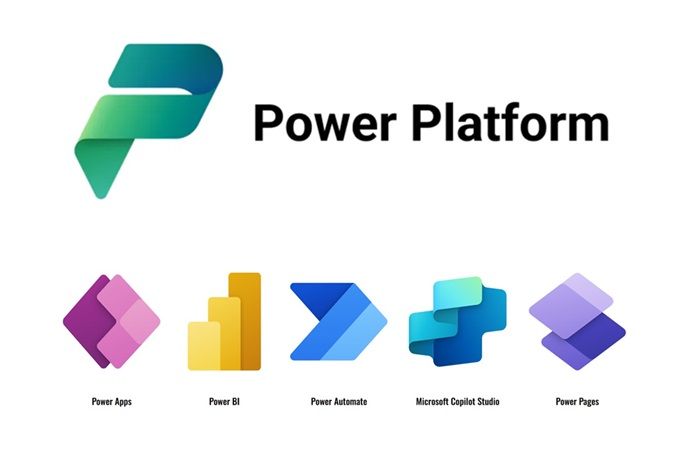
Companies are looking to quickly create applications today and do not want to wait months for application development. As a result of this need, low-code and no-code platforms are gaining a lot of popularity. Additionally, .NET can be integrated very well with these tools, therefore enabling teams to build solutions faster while still providing them with a solidly-built back end.
Some of the most commonly used Low-Code/No-Code products that support .NET include:
- Building simple applications with Power Apps
- Automating workflows with Power Automate
- Connecting services and automating processes with Logic Apps
- Utilizing serverless tasks using Azure Functions
- Creating enterprise-level business applications using Dynamics 365
How it helps for Enterprises
- Speed up application development time
- Reduce reliance on large-scale development teams
- Ability to prototype/create bespoke internal applications rapidly
- Provide a strong back end with .NET capabilities
- Give both technical and non-technical users more options
By integrating low-code platforms and .NET’s robust nature, companies will benefit from the dual advantages of quick development with an enterprise-level performance.
Cross-Platform Development with .NET MAUI
More and more organizations are developing both desktop and mobile applications as a means of providing support for their internal processes, employees, and customers. The .NET Multi-platform App UI (MAUI) framework enables developers to create applications for a variety of platforms from a single codebase, helping to simplify this practice.
Applicable Platforms
- Windows
- Android
- iOS
- macOS
What Makes .NET MAUI So Appealing?
- One application can execute across multiple operating systems
- Rapidly build applications through use of common/shared code
- Integration with existing back-end systems developed in .NET
- System performance is comparable to native applications and the user interface (UI) responds in a manner familiar to native application users
- Reduced costs associated with maintenance over the duration of the project
In What Ways Can Enterprises Use .NET MAUI?
- Applications that assist with field service and inspection
- Applications that improve productivity for employees
- Dashboards and reporting applications for mobile devices
- Customer support and appointment setting applications
With the use of .NET MAUI, organizations have access to a complete cross-platform application development method. As a result, it reduces the total amount of development time while also providing high functional, native-style applications.
API-First Development with .NET
.NET is a widely accepted and trusted programming framework for creating high-performing and secure APIs that can be easily operated at scale. As a result, businesses across the globe are choosing .NET to support their API development needs.
Key Trends in .NET for API Development
- Minimal APIs: Allows developers to produce faster and cleaner code.
- Improved Handling of JSON: Accommodates faster transmission speeds.
- Enhanced Authentication and Authorization Controls: Provides strong security measures.
- Support for gRPC: Provides rapid communication between multiple services.
- Versioning of APIs: Ensures stability in the long term and backward compatibility.
As a result of the above mentioned factors, enterprises are choosing .NET as their preferred choice for building and deploying APIs.
Benefits of Using .NET as API Framework
- Ability to Reliably Handle High Volume Traffic
- Very High Level of Security Via Built-In Identity Support
- Rapid Deployment on Cloud Platforms
- Consistent Response Time Across Services
- Reduced Ongoing Support & Maintenance Requirements
With .NET, organizations will have the ability to build high-quality, scalable APIs that are both secure and future-proof; making them the ideal choice to power enterprise-scale systems.
DevOps and Automation Using .NET
Modern enterprise applications require fast-changing functionality, frequent tests, and seamless deployments. DevOps gives developers the tools to enhance their productivity by implementing an infrastructure for use with their existing systems and providing tools to achieve Productivity using tools and methods provided by DevOps. .NET provides a variety of automation solutions to support your DevOps efforts.
Here is how .NET support your DevOps.
- Tracking Pipeline and Project Status using Azure DevOps
- Automating Build and Deployment Processes with GitHub Actions
- Built-in Continuous Integration/Continuous Deployment Tools (CI/CD) to deliver applications in an efficient and streamlined manner.
- Create and Deploy Applications as Containers
- Tools to perform Automated Testing on Applications
Benefits for Companies
- Deliver New Features at a Rapid Rate
- Decrease the Number of Bugs in Production
- Improve the Quality of Code
- Increase Security through Automated Scanning
DevOps has allowed .NET teams to develop, test and deploy updates to applications in a safe and efficient manner.
Serverless Computing & .NET
Serverless computing is becoming increasingly popular because it can eliminate the need to manage your own servers. .NET enables businesses to run just those functions that they require, saving time and money.
Serverless Technologies Supported by .NET
- Azure Functions
- AWS Lambda (supports .NET)
Advantages of Serverless Computing using .NET
- Pay per use only
- No server maintenance
- Scale automatically based upon demand
- Fast and simple to deploy
Serverless .NET is ideal for APIs, background jobs, event processing and automated workflows.
Real-Time Applications with SignalR
Real-Time applications are now increasingly popular. Whereas, .NET’s Signal has provided an efficient means for creating such applications. Using SignalR, users will experience immediate updates to their applications, without requiring reloading of the application.
Use Cases for Signals Applications
- Real-time notification
- Real-time monitoring of IoT devices
- Stock price updates in real-time.
- Chat applications
- Live Dashboards
With SignalR, developers can have very quick, high performance and highly interactive user experience with a minimum setup.
Enhancement of Logging, Monitoring, and Observability
In order to gain visibility into applications, the use of monitoring & logging tools in the .NET ecosystem has increased by enterprises.
Some of the more popular logging & monitoring tools for .NET applications are:
- Serilog
- Application Insights
- Seq
- ELK Stack
- OpenTelemetry
These tools enable teams to detect problems sooner, monitor performance better, and ensure their applications are healthy.
Sustainable and Cost-Efficient Development
Many companies are trying save money as well as reduce the amount of energy they use. .NET has become known for robust performance and, energy-saving platform.
.NET can reduce costs in several ways:
- By providing lower hosting and compute consumption
- By having a low CPU and memory performance
- By providing a high level of performance while consuming minimal amount of resources
- By optimizing for best use in the cloud
Because of these capabilities, .NET provides a great way to build large-scale applications that require both fast performance and cost capacity.
Growing .NET Community and Ecosystem
The community supporting .NET is another tremendous advantage for .NET. There are currently millions of developers supporting .NET by contributing libraries, tools, and frameworks, which continue to make the platform even more powerful every year.
Benefits of Having a Large .NET Community:
- Provides quicker resolutions to issues
- More learning materials, tutorials, and documentation
- Continued innovation
- Contributions in open source
With all of these aspects, the growing and thriving community will guarantee that .NET will continue to evolve and improve to meet the future demands of application development.
The Future of .NET in Enterprise Development
The future of .NET will be very bright as enterprises continue their migration toward new technologies, including cloud based systems, AI driven solutions, microservices, and applications that work across platforms. Microsoft regularly releases updates to .NET that improve performance, enhance security, and provide integration to cloud providers.
As container-based solutions, DevOps, low-code platforms, serverless architectures, and real-time applications continue to gain popularity, .NET will become increasingly important to help businesses meet their current and future enterprise software needs. Companies adopting the .NET framework today are making an investment in a framework capable of sustaining long-term growth and innovation.
Conclusion
.NET is still among the most secure, scalable and future-ready platforms available today for developing applications for companies. With security, cloud support and modern tools that allow businesses to create applications that are both reliable and prepared for the future. To summarize, NET remains one of the highly regarded platforms for enterprise app development today.